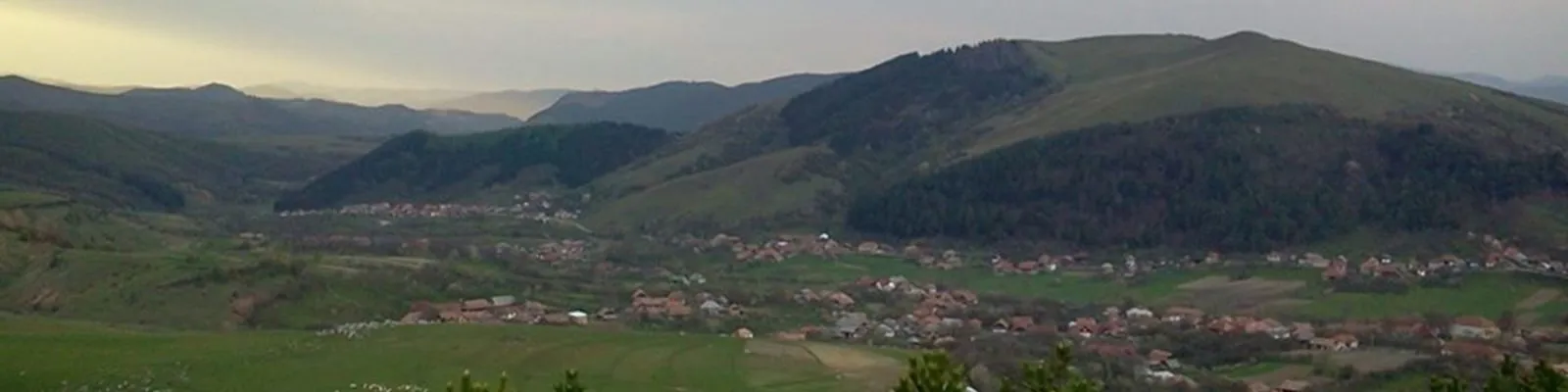
Morlaca and Menumorut
Few people know that the place name Morlaca can be linked to the name of Menumorut and that of his grandfather (Moruth or Maroth).
The Hungarian name of the village, Maróthlaka, is thought to come from joining the words "Maroth" and "Lak" ("house", "dwelling" in Hungarian), which would translate as "Maroth's dwelling", hence the place name Maróthlak, and later Maróthlaka. It is worth mentioning that in the 9th-10th centuries Morlaca belonged to the duchy of Menumorut.
Here we also recall the lines written in 1921 by Traian Șuteu, a teacher in the village of Morlaca, delegate to the Great National Assembly of Alba Iulia on 1 December 1918 and also a member of the Great Romanian National Council:
"Having thus passed fortunately through all the overwhelming calamities, poor in wealth but still pure in soul, they began to gather strength, to draw together, so that when the rule of Lord Memmorot could take shape between the waters of the Criș rivers, it found them worthy of having raised among them: his summer residence.
As proof, the old people can point out in the village a little lane which, together with two gardens beside it, was paved with stones, all of them river pebbles. The soil of the place is clayey, and so the presence of the pebbles cannot be explained as part of the local ground, but only by their having been brought and laid there by human hands.
Thus, from the names Maroth and Lak, meaning the dwelling of Memmorat, came Marothlak or Marothlaka, and later it remained simply Marothlaka, which was the official name. In Romanian it is called: Morlaca." [read more here, pp. 12-13]
It should be noted that in the earliest documents the village is mentioned as Maróthlak in 1493, Possesiones Maróthonlak in 1519, Maróthlaka in 1666 and Maróthacz in 1762.
"The name of Menumorut, whatever its meaning, which has not been fully clarified, like that of his presumed grandfather (Moruth, Maroth, Morut), also appears later in personal names and place names. [...] There were four settlements linked to the name of the duke of Bihor [...] Those that survive to this day are Marothlaka (today Morlaca, Cluj county) and Maroth (today Moroda, Arad county). All these settlements belonged to the duchy of Menumorut." [Ioan-Aurel Pop, Românii şi maghiarii în secolele IX-XIV. Geneza statului medieval în Transilvania (Romanians and Hungarians in the 9th-14th Centuries: The Genesis of the Medieval State in Transylvania), Cluj-Napoca, 1996, p. 104]
0 comments