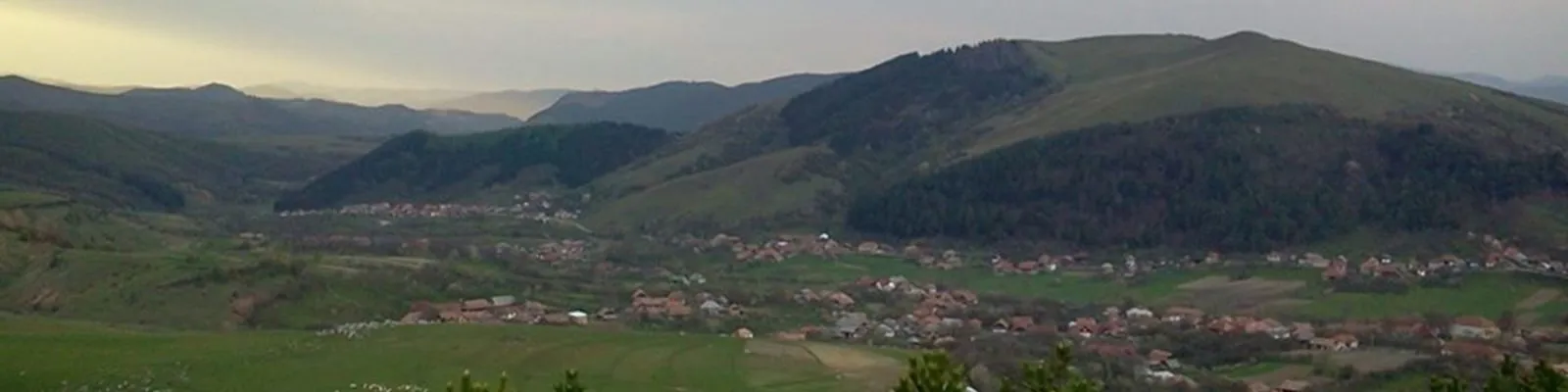
The Orthodox Church of Morlaca
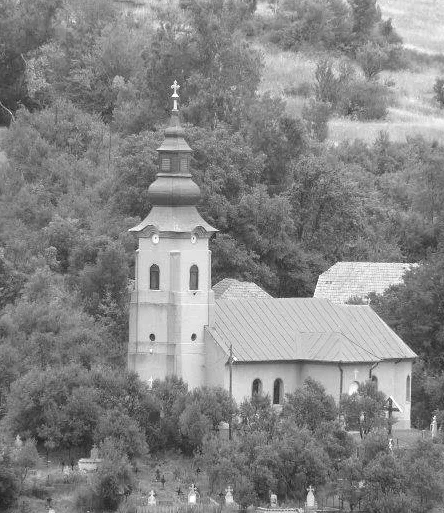
 The Orthodox Church of Morlaca was built between 1837 and 1838, on the site of another, older wooden church, built - most probably - between 1724 and 1735.
A little history...
In the 15th and 16th centuries, the village of Morlaca had two churches and an Orthodox monastery. Tradition tells us that the first church of the settlement stood at "La pietrii" (At the Stones) and that it was made of oak wood. It is said to have later been moved to the site of the present-day church of the village. Oral sources, however, recall a rather fairy-tale-like event. It is said that "the villagers, intending to move the village further down, decided to follow the direction in which the first wood chip would fly. And so they arrived at the site of the present church, and around it, the hearth of the village" [Nicolae Șteiu, Morlaca: Satul de la poala Măgurii, p. 19].
Initially, the village priests followed the Orthodox rite, the Eastern Christian one, but for 200 years the Greek Catholic rite was also practised, as a result of the pressure and the policy of forced Catholicisation pursued by the Hungarian rulers of that time. The transition from the Orthodox to the Greek Catholic rite took place in the second half of the 18th century. Thus, in 1733, three priests were mentioned in Morlaca: Achim and Vasile and Vasile (probably father and son). Achim was the first to convert to Greek Catholicism, while the last two were to remain faithful to the Orthodox faith. This led to an unusual situation: the Orthodox Parish of Morlaca belonged to the Archpriestship of Călata, while the Uniate one belonged to the Archdeaconate of Jucu de Jos. "Achim was succeeded by the Uniate priest Gherontie, who was also archpriest of the Morlaca District. [...] From the time of priest Achim's ministry until the end of the 18th century, the Christians of Morlaca converted to the Greek Catholic Church." [Nicolae Șteiu, Morlaca: Satul de la poala Măgurii, p. 76]. Interestingly, around 1886, the documents of the time mention the Greek Catholic Archpriestship of Morlaca, which was led by vice-archpriest Analia Popu and which comprised 17 parishes in the surrounding villages with a total of 13,212 souls. [more here, pp. 166-171]
In a document from 1886, the parish of Morlaca was described as follows: "Morlaca (Marothlaka), county etc. as above. Old parish. Stone church from 1837, dedicated to the Most Holy Trinity. Wooden parish house. Under the conf. lib. of the Ord. Registers kept since 1850. Wooden school. 78 pupils. There are also: 1 Reformed family and 1 Jewish family. Language: Romanian. Nearest post office: Banffi-Hunyad." [more here, p. 169]
Over time, the priests serving the Parish of Morlaca have been:
- 1733 - Priests Vasile "senior" and Vasile "junior" (probably father and son);
- In the second half of the 18th century - the Uniate priest Achim, then the Uniate priest Gherontie (starting with them, all the priests who served in the church until 1948 followed the Greek Catholic rite);
- 1842 - 1857 - Vice-archpriest Georgiu Pop;
- 1857 - 1892 - Archpriest Ananie Pop;
- 1892 - 1924 - Archpriest Ioan Pop;
- 1924 - Archpriest Virgil Pop (more here, pp. 46-47);
- 19xx - 1965 - Victor Pop (in 1948, priest Victor Pop returned to the Orthodox Christian rite);
- 1966 - 1973 - Priest Ioan Pop;
- 1973 - 2014 - Priest Ioan Călătan;
- since 2014 - Priest Florin Șomlea.
Today...
Today, the Orthodox Parish of Morlaca has about 260 families.
Bibliography
- Codruţa Trană, Nuţu Moiş, Monografia comunei voivodale Călata, jud Cluj
- Nicolae Șteiu, Morlaca: Satul de la poala Măgurii, Casa de Editură Dokia, Cluj-Napoca, 2009
- Daniel Dumitran, Un timp al reformelor: Biserica Greco-Catolică din Transilvania sub conducerea episcopului Ioan Bob:


0 comments